[SNU College of Engineering Special AI Lecture] The AI Revolution for Engineers - From Algorithms to Agentic Systems, Silicon Valley to Global Impact
Abstract
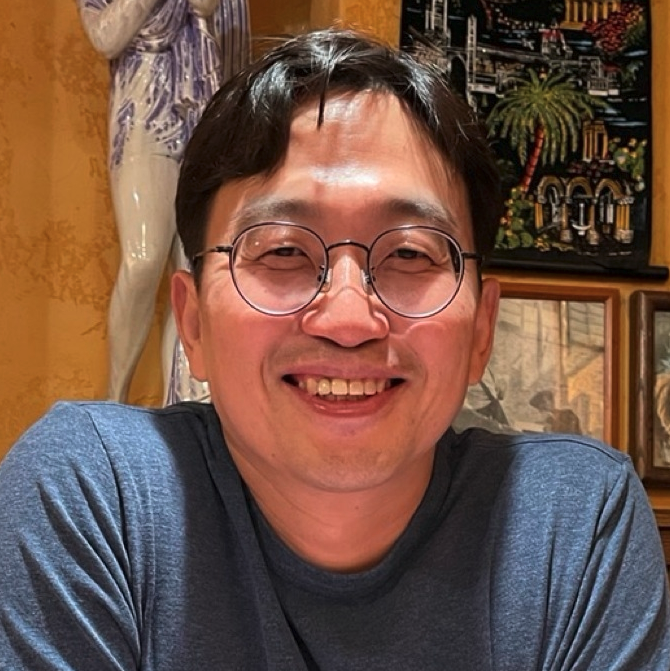
The most transformative technological innovations rarely emerge from single disciplines—they occur at the intersections, where insights from one field illuminate possibilities in another. My own journey illustrates this pattern - from developing optimization algorithms for semiconductor manufacturing at Samsung, to building recommendation systems at Amazon that generated over $200M in revenue, to now pioneering AI-powered cancer diagnostics at Erudio Bio. Each transition required not just learning new technical domains but developing what I call “the connector’s mindset”—the ability to recognize deep structural patterns that transcend surface differences between industries. This lecture shares the lessons learned from fifteen years of applying AI across different domains, and argues that the future belongs not to narrow specialists but to engineers who can fluidly move between technical fields while maintaining rigorous depth.
We will explore the complete AI landscape through multiple lenses simultaneously. Technically, we’ll decode the mathematical foundations (linear algebra, calculus, probability, optimization theory) that underpin all modern AI, trace the architectural evolution from early neural networks through Transformers to today’s agentic systems, and examine why certain breakthroughs (attention mechanisms, self-supervised learning, reinforcement learning from human feedback) proved transformative while others fizzled. Industrially, we’ll analyze how AI is actually deployed in production environments—the data pipelines, training infrastructure, deployment strategies, and monitoring systems that separate research prototypes from reliable products serving millions of users. Most importantly, we’ll examine the cross-industry patterns that reveal how AI innovation actually happens - how semiconductor manufacturing insights inform biotech automation, how e-commerce personalization techniques transfer to medical diagnostics, and why Silicon Valley’s culture of rapid experimentation and knowledge-sharing accelerates innovation in ways that traditional corporate R&D structures cannot match.
For SNU engineering students—who represent Korea’s best and brightest—this lecture offers something rare - an insider’s view of how Silicon Valley actually works, delivered by someone who has succeeded there while maintaining deep Korean roots. You will gain technical clarity on AI’s real capabilities versus marketing hype, practical insights into building production systems that scale, and strategic perspective on career paths that maximize impact. But more fundamentally, you will see a model for how Korean engineers can succeed globally not by becoming more “American” but by leveraging distinctive strengths—technical rigor, long-term thinking, cross-disciplinary synthesis—that Korean education cultivates. The question isn’t whether AI will transform engineering; it’s whether you will be among those leading the transformation or merely responding to it.